
Table of Contents
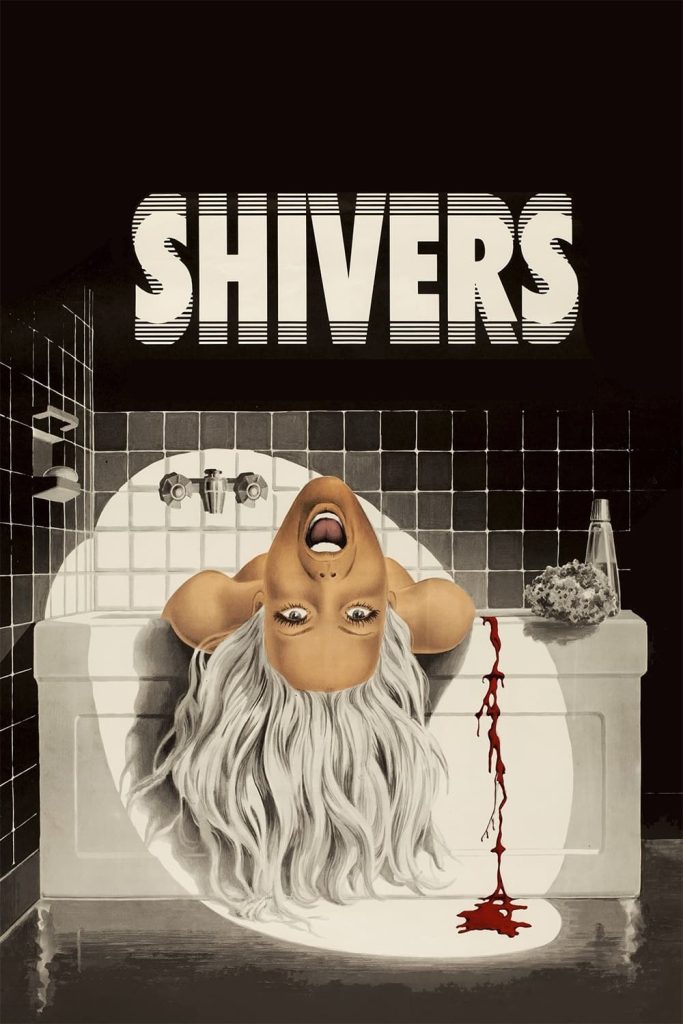
Shivers (1975): David Cronenberg’s Parasitic Masterpiece of Flesh
There is something inherently unsettling about the modern high-rise. It is a vertical tomb of concrete and glass, where neighbors are separated by mere inches of drywall, yet remain total strangers.

In 1975, David Cronenberg decided to exploit that claustrophobia, injecting a dose of pure, biological terror into the sterile hallways of a suburban apartment complex.

The result was Shivers, a film that remains a grimy, essential pillar of body horror.

If you have a weak stomach, turn back now. This isn’t a film about ghosts or jump scares; it is about the fragility of the human vessel. Cronenberg treats the body like a machine that has been sabotaged from the inside out. When the parasites start crawling, they don’t just kill—they transform.

They turn the polite, repressed residents of Starliner Towers into something far more primal, far more dangerous, and infinitely more disgusting.
The Anatomy of an Outbreak
At its core, Shivers is a story about the collapse of social order. Produced by Ivan Reitman, the film posits a terrifying “what if”: what if the very thing that makes us human—our desire for connection and intimacy—was weaponized against us?

The parasites in this film are not just biological entities; they are agents of chaos that strip away the veneer of civilization.

The practical effects are the real star of the show here. We aren’t talking about CGI polish; we are talking about slimy, slug-like horrors that force their way into orifices with a wet, squelching finality.

It is visceral, it is messy, and it is exactly the kind of nightmare fuel that defined the mid-70s horror landscape. Cronenberg understands that true horror comes from the realization that our bodies are not our own.

Spoilers: A Descent into Nymphomaniac Madness
The plot of Shivers is deceptively simple. Within the confines of a suburban high-rise, a parasite begins to spread among the residents. These aren’t your typical movie monsters. Once infected, the victims are transformed into mindless, nymphomaniac fiends. The infection spreads through physical contact, turning the apartment building into a breeding ground for a new, terrifying form of human existence.

As the infection jumps from host to host, the social structure of the building dissolves. The residents, once concerned with their daily routines and domestic squabbles, are reduced to a singular, carnal drive. It is a frantic, claustrophobic race against time as the survivors realize that the walls of their home have become a trap. There is no escaping the parasite once it has taken hold, and the ending leaves the viewer with a lingering sense of dread that is hard to shake.
Reception: Then and Now
When Shivers hit the scene, it was a shock to the system. Critics and audiences didn’t quite know what to make of Cronenberg’s uncompromising vision.

Today, the film holds a 6.3 rating on IMDb and a Metascore of 58. These numbers, however, fail to capture the cultural impact of the film. It was a bold statement from a director who would go on to define the body horror genre for decades to come.
Cast and Characters
The ensemble cast brings a grounded, desperate energy to the madness. The performances are essential to selling the transformation from suburbanites to infected fiends:
- Paul Hampton as Roger St. Luc
- Joe Silver as Rollo Linsky
- Lynn Lowry as Nurse Forsythe
- Allan Kolman as Nicholas Tudor
- Susan Petrie as Janine Tudor
- Barbara Steele as Betts
- Ronald Mlodzik as Merrick
- Barry Baldaro as Detective Heller
Behind the Scenes and Production
The production of Shivers was a masterclass in low-budget ingenuity. Filming in a real apartment complex added a layer of realism that soundstages simply cannot replicate.
The practical effects team had to work with limited resources to create the parasite, resulting in a tactile, slimy aesthetic that feels far more dangerous than modern digital creations. The film stands as a testament to what can be achieved when a director has a singular, uncompromising vision and the grit to see it through.
Trailer and Viewing
If you want to see the madness for yourself, search YouTube for the official trailer. It captures the frantic, unsettling tone of the film perfectly.
The Legacy of the Parasite
Shivers effectively launched the body horror subgenre into the mainstream. It paved the way for Cronenberg’s later masterpieces and influenced a generation of filmmakers who weren’t afraid to get their hands dirty. It remains a foundational text for anyone interested in the intersection of science fiction and horror.
Where to Buy & Stream
Sources
Related Products on Amazon:

We may earn a small commission from purchases made through these links.




Leave a Reply