

Table of Contents
Introduction
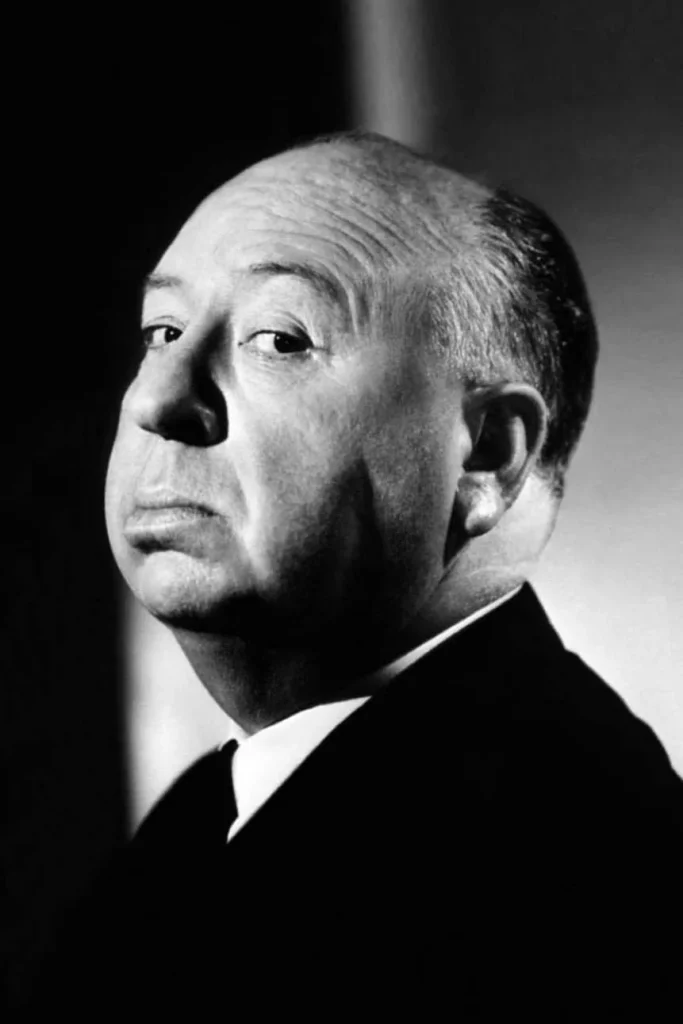
Ah, 1960. A simpler time, perhaps? Before jump scares were a dime a dozen and horror films were often relegated to the B-movie circuit. Then came Alfred Hitchcock 🛍️, the master of suspense, and dropped a cinematic bomb that would forever change the landscape of terror. We’re talking, of course, about Psycho. This isn’t just a movie; it’s a cultural touchstone, a masterclass in psychological manipulation, and a film that still has the power to make you think twice about checking into that roadside motel.

Forget your modern-day slashers with their elaborate death traps and gratuitous gore. Psycho operates on a different level entirely. It’s the creeping dread, the unsettling atmosphere, and the sheer audacity of its narrative twists that burrow under your skin and stay there. Hitchcock wasn’t just telling a story; he was playing with his audience, daring them to predict what was coming next, and then gleefully subverting their expectations. It’s a film that respects your intelligence while simultaneously messing with your head, and honestly, that’s a rare and beautiful thing in horror.
The Genesis of a Nightmare: Marion Crane’s Ill-Fated Journey
Our story kicks off with Marion Crane, played with a captivating blend of desperation and ambition by Janet Leigh. Marion’s life isn’t exactly a fairytale. She’s a real estate clerk, and let’s just say her moral compass takes a rather sharp detour when a substantial sum of money lands in her lap. Faced with mounting debts and a yearning for a better life, she makes a decision that will set in motion a chain of events far more terrifying than she could ever imagine.
She flees. With the cash stuffed into her purse, Marion embarks on a cross-country drive, hoping to escape her past and build a new future. But the road, as it often does in Hitchcock’s films, leads her to unexpected and ultimately sinister destinations. Her journey is a classic example of a character’s choices leading them into a trap, a narrative device that Hitchcock wields with surgical precision.
A Motel, a Mother, and a Man: The Plot Unfolds (Spoilers Ahead)
Marion Crane (Janet Leigh), a Phoenix secretary trapped in an unfulfilling life and a stalled affair with Sam Loomis (John Gavin), makes a reckless decision: she steals $40,000 in cash and flees town, hoping to start over. Guilt and panic shadow her drive, and a violent storm eventually forces her off the road and into the isolated Bates Motel.
There she meets Norman Bates (Anthony Perkins), the shy, soft‑spoken young man who runs the motel and lives with his domineering mother in the looming house above. Their uneasy conversation—Norman’s strained devotion to his mother, Marion’s dawning regret—nudges Marion toward redemption. She resolves to return to Phoenix.
She never gets the chance. In the film’s most shocking moment, a shadowy figure murders her in the shower. Norman, horrified, scrambles to hide the crime, sinking her body, car, and the stolen money into a nearby swamp.
Marion’s disappearance draws the attention of her sister, Lila Crane (Vera Miles), and Sam. Joined by private investigator Milton Arbogast (Martin Balsam), they trace her path to the Bates Motel. Arbogast grows suspicious of Norman’s evasiveness and ventures toward the house—only to be killed by the same unseen assailant.
As Lila and Sam continue the search, the film tightens its grip. Norman’s jittery charm curdles into something darker, and the unseen “Mother” becomes a menacing presence. Their investigation leads to the truth buried inside the Bates home: Norman’s fractured psyche and his chilling relationship with his mother. The final reveal remains one of cinema’s most enduring shocks, securing Psycho’s place as a landmark of psychological horror.
The Cast: Faces That Launched a Thousand Nightmares
The brilliance of Psycho is undeniably amplified by its stellar cast. At the heart of the madness is Anthony Perkins as Norman Bates. Perkins delivers a performance that is both chillingly innocent and deeply disturbing. He perfectly embodies the duality of Norman, a man seemingly trapped by his own fractured mind and the suffocating presence of his mother. It’s a performance that redefined the cinematic villain, moving away from overt monstrosity to a more insidious, psychological terror.
Janet Leigh as Marion Crane is the perfect audience surrogate. We empathize with her initial desperation and her flawed choices, making her shocking demise all the more impactful. Her performance grounds the film in a relatable reality before it descends into the surreal horror of the Bates Motel. Vera Miles as Lila Crane provides the necessary investigative drive, her determination to find her sister mirroring the audience’s own quest for answers. And John Gavin as Sam Loomis offers a solid, if somewhat overshadowed, presence as the concerned lover caught in the unfolding mystery.
Supporting performances from Martin Balsam as the determined private investigator Milton Arbogast, John McIntire as Sheriff Al Chambers, Simon Oakland as Fred Richman, and Frank Albertson as Tom Cassidy add further depth to the narrative, each playing their part in the unfolding tragedy and investigation. Their characters, though not as central as Norman or Marion, contribute to the film’s grounded realism before the true horror is revealed.
Hitchcock’s Vision: Crafting Terror with Precision

Alfred Hitchcock, a name synonymous with suspense, was not just the director of Psycho; he was also its producer, giving him immense creative control. This was a film he approached with a singular vision, pushing boundaries and challenging cinematic conventions. He famously shot the film in black and white, a decision that not only saved money but also enhanced the film’s noirish atmosphere and allowed for more subtle, unsettling visuals. The stark contrasts and shadows played a crucial role in building dread.
The production of Psycho was shrouded in secrecy, a testament to Hitchcock’s desire to surprise his audience. The film’s narrative structure itself was a bold move, killing off its apparent protagonist early on. This subversion of audience expectations was a calculated risk that paid off handsomely, cementing the film’s legacy as a game-changer. Hitchcock’s meticulous planning extended to every frame, every cut, and every sound, all designed to elicit the maximum emotional response from the viewer.
The Unforgettable Trailer: A Glimpse into the Abyss
While specific release dates and reception details are not provided, it’s safe to say that Psycho, upon its release, was a sensation. Hitchcock himself famously introduced the film, urging audiences not to reveal the plot twists, a testament to the film’s groundbreaking narrative. The film’s impact was immediate and profound, sparking both controversy and critical acclaim. Its success proved that audiences were ready for more sophisticated and psychologically driven horror.
The film’s legacy is undeniable. It didn’t just scare audiences; it made them think. It explored themes of madness, repression, and the darkness that can lie beneath the surface of ordinary life. Psycho is a masterclass in building tension, using suggestion over explicit gore (though what gore there is, is impactful), and creating characters that linger long after the credits roll. It’s a film that has been analyzed, debated, and celebrated for decades, and its influence can be seen in countless horror films that followed.
The Enduring Impact: A Franchise Born from Fear
Psycho didn’t just stand alone; it spawned a franchise. The success of the original film led to several sequels, exploring further the twisted world of Norman Bates and the Bates Motel. While the sequels varied in quality, they all owe their existence to the groundbreaking original. The character of Norman Bates became an icon of horror, a figure that continues to haunt the imaginations of audiences worldwide.
The film’s influence extends far beyond its own sequels. It paved the way for the slasher genre, demonstrating the power of a compelling villain and a shocking narrative. Its psychological depth and masterful suspense have inspired generations of filmmakers, proving that true horror often comes from within the human mind. Psycho remains a benchmark for psychological thrillers and a must-watch for anyone interested in the evolution of horror cinema.
Easter Eggs & Little-Known Facts
- Chocolate Syrup for Blood: Because the film was shot in black and white, traditional fake blood didn’t show up effectively. To achieve the iconic look of blood swirling down the drain in the shower scene, Alfred Hitchcock used Bosco chocolate syrup.
- A Week to Film the Shower Scene: The famous 45-second shower scene took an entire week to shoot, using 78 different camera setups. The set was designed with removable walls to allow for the camera to get into every tight angle.
- The Power of Sound: The iconic shrieking violin score by Bernard Herrmann is integral to the shower scene’s impact. However, Hitchcock initially wanted the scene to have no music at all. Herrmann composed the score anyway, and Hitchcock was so impressed that he reportedly doubled his salary and credited the music for “33% of the film’s effect.” The sound effect of the knife stabbing flesh was created by a Foley artist plunging a knife into a casaba melon.
- Inspired by a Real Killer: The film is loosely based on Robert Bloch’s 1959 novel of the same name, which was in turn inspired by the real-life crimes of Wisconsin serial killer and body snatcher, Ed Gein. Gein’s case also served as an inspiration for other horror villains like Leatherface from The Texas Chain Saw Massacre and Buffalo Bill from The Silence of the Lambs.
- The “No Late Admissions” Policy: To ensure audiences wouldn’t miss the shocking twist of Marion’s death, Hitchcock instituted a strict “no late admissions” policy in theaters. This was unusual at the time, but the long lines of people waiting to see the film made it a huge success.
- Self-Financing the Film: Paramount Pictures was hesitant to fund the film due to its controversial subject matter. Hitchcock, confident in the project, personally financed the movie, using his crew from the TV series Alfred Hitchcock Presents to keep costs down. He also gave up his director’s fee in exchange for 60% ownership of the film, which made him a fortune.
- The First American Film to Show a Flushing Toilet: The movie is noted for being the first American film to show a flushing toilet on screen. Screenwriter Joseph Stefano insisted on its inclusion for realism, and Hitchcock made sure it was integral to the plot (Marion flushing the torn-up note) so that the censors couldn’t remove it.
- A Hidden Cameo: True to form, Hitchcock makes a brief cameo appearance about six minutes into the film. He can be seen standing outside Marion’s office building, wearing a cowboy hat. He placed his cameo at the beginning of the movie so that audiences wouldn’t spend the rest of the film searching for him.
Janet Leigh—The legendary star of Psycho—has a charming and meta connection to the Halloween franchise through the film Halloween H20: 20 Years Later (1998). She plays a character named Norma, who works as a secretary at Hillcrest Academy, where Laurie Strode (played by Jamie Lee Curtis 🛍️, Leigh’s real-life daughter) is the headmistress.
Why it’s clever:
- Her cameo is a nod to her iconic role as Marion Crane in Psycho, complete with her driving away in the same model car Marion used in that film—a 1957 Ford Sedan.
- The scene is layered with self-referential humor and horror nostalgia, especially since Halloween H20 was released during a wave of post-Scream meta-horror films.
- It’s also a sweet moment of cinematic legacy, linking two generations of scream queens.
- So while Janet Leigh wasn’t in the original Halloween (1978), her appearance in H20 is a loving tribute to horror history and her own family ties to the franchise.
Where to Experience the Terror
For those eager to revisit this classic or experience it for the first time, Psycho is widely available.
You can often find it on major streaming platforms, and physical media releases, including Blu-ray and DVD, are readily accessible through online retailers and brick-and-mortar stores. Many editions offer restored picture and sound quality, allowing you to appreciate Hitchcock’s meticulous craftsmanship in all its glory. Exploring different editions can also lead you to bonus features that offer further insight into the film’s creation.
Further Viewing: More from the Master of Suspense
If Psycho has whetted your appetite for Hitchcock’s brand of terror and suspense, there’s a vast and brilliant filmography to explore. Consider diving into other masterpieces like Vertigo, Rear Window, North by Northwest, or The Birds 🛍️. Each of these films showcases Hitchcock’s unique ability to craft gripping narratives, build unbearable tension, and delve into the darker aspects of human nature. His filmography is a treasure trove for any cinephile.
Conclusion: Still Chilling After All These Years
Psycho is more than just a horror film; it’s a cinematic event. It’s a testament to Alfred Hitchcock’s genius, a film that dared to be different and, in doing so, redefined an entire genre. From its shocking opening to its unforgettable climax, it’s a journey into the heart of darkness that remains as potent and unsettling today as it was in 1960. So, dim the lights, settle in, and prepare to be thoroughly, delightfully, and terrifyingly disturbed. Just… maybe avoid the showers.
Sources
Related Products on Amazon:

We may earn a small commission from purchases made through these links.
Leave a Reply