

Table of Contents
Exploring the feminist reinterpretation of a beloved horror franchise.
Short summary (non-spoiler)
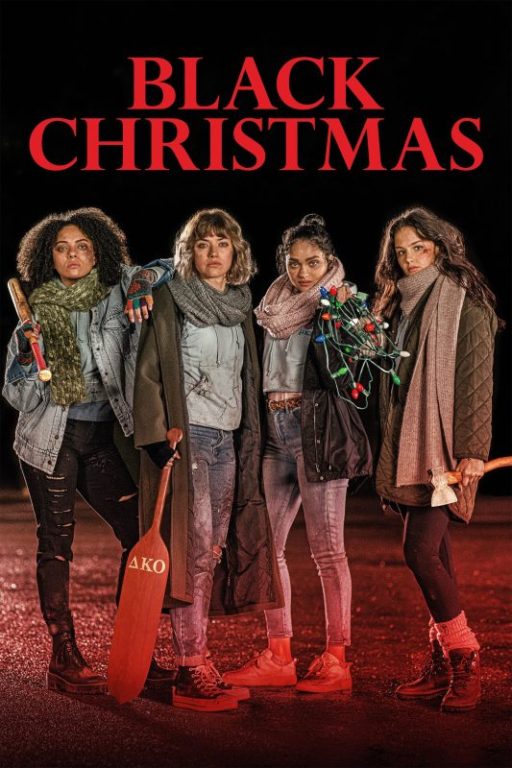
“Black Christmas” (2019) is a contemporary reimagining of the iconic 1974 slasher film, injecting a potent feminist agenda into its narrative. Directed by Sophia Takal, the film centers on a group of sorority sisters at a prestigious university who find themselves targeted by a mysterious, masked killer. As the killings escalate, these young women must band together to fight for their lives, uncovering a sinister conspiracy that extends far beyond their immediate terror. The film attempts to update the slasher genre for a new generation, focusing on themes of female empowerment, consent, and the insidious nature of patriarchal oppression, all while delivering a dose of suspense and gore.
Plot synopsis
The story follows Riley Stone, a college student, who is spending her winter break at her sorority house, Mu Sigma Upsilon. Alongside her close friends, Kris, Lauren, and Jess, Riley tries to navigate the final days of the semester and prepare for upcoming exams.
Strange occurrences begin to plague the sisters. A group of students from a rival fraternity engages in increasingly aggressive and unsettling behavior towards the sorority sisters, particularly towards Riley.
During a party at the sorority house, a masked intruder in a black hooded robe begins stalking and attacking the sisters. The early victims appear random, but the pattern soon becomes clear: the women are being targeted by members of the Hawthorne fraternity, who are acting under the supernatural influence of the university’s founder, Calvin Hawthorne. As the attacks escalate, Riley and her friends find themselves isolated, dismissed by authorities, and forced to rely on one another for survival.
Official Trailer [4K]
As the body count rises, Riley uncovers that the fraternity has been using a black, tar‑like substance that seeps from a bust of Calvin Hawthorne. This substance allows the frat brothers to become possessed by Hawthorne’s misogynistic ideology, turning them into violent enforcers of patriarchal control.
Helena is revealed to be an accomplice who has aligned herself with the fraternity, helping lure and undermine the other women in hopes of gaining approval and status. The film culminates in a confrontation inside the fraternity house, where Riley and the remaining sisters fight back together. By destroying the bust—the source of Hawthorne’s power—they break the supernatural control over the fraternity. Though they defeat the immediate threat, the film underscores that resisting entrenched misogyny is an ongoing struggle.
Spoilers
The core twist of Black Christmas (2019) is that the masked killers are not random murderers but fraternity members under the supernatural influence of the college’s founder, Calvin Hawthorne. The Hawthorne fraternity uses a black, tar‑like substance that seeps from a bust of Calvin, allowing them to become possessed and controlled by his patriarchal ideology. Their goal is to reassert dominance over women who challenge the status quo, turning misogyny into a literal force of violence.
Helena, rather than being a high‑ranking cult leader, is revealed as a manipulated accomplice who sides with the fraternity in hopes of gaining approval and power. Her betrayal helps the frat lure and attack the sorority sisters.
In the climax, Riley, Kris, and the remaining women confront the fraternity inside their ritual chamber. The sisters fight back physically and symbolically, destroying the bust of Calvin Hawthorne—the source of the supernatural control. Once the bust is shattered, the possessed fraternity members lose their power, and the women burn the house down, severing Hawthorne’s influence for good.
Cast & key crew
“Black Christmas” (2019) features a cast of talented young actors and a seasoned crew, with a focus on female voices behind and in front of the camera.
- Imogen Poots as Riley Stone: The protagonist, a college student grappling with grief and the escalating terror.
- Cary Elwes as Professor Gunder: A professor at the university with a mysterious connection to the events.
- Brittany O’Grady as Jess Bradford: Riley’s friend and fellow sorority sister.
- Aleyse Shannon as Kris: Another member of the sorority house.
- Lily Donoghue as Lauren: A close friend of Riley.
- Caleb Eberhardt as Josh
- Sophia Takal as Director & Co-writer: Bringing a modern, feminist perspective to the franchise.
- April Wolfe as Co-writer: Collaborating with Takal to craft the screenplay.
- Greg Newman as Producer: Overseeing the production of the film.
- Jason Blum as Producer: Head of Blumhouse Productions, known for his success in the horror genre.
The film’s direction by Sophia Takal is notable for its attempt to inject a contemporary social commentary into the slasher formula, a departure from the original film’s more straightforward horror. The performances, particularly from Poots, aim to ground the supernatural and violent elements in relatable emotional arcs.
Production & trivia
The 2019 iteration of Black Christmas was conceived as a deliberate departure from its predecessors, aiming to engage directly with contemporary social issues. The decision to frame the film as a feminist statement was central for director Sophia Takal and co‑writer April Wolfe. Their goal was to explore themes of female solidarity, the pervasive nature of misogyny, and the ways women reclaim power in the face of systemic oppression. This thematic emphasis marked a significant shift from the original 1974 film, which—while featuring strong female characters—remained rooted in a more traditional slasher format.
The film’s production was overseen by Jason Blum’s Blumhouse Productions, a studio known for commercially successful horror that often incorporates social commentary. Blumhouse’s involvement signaled an interest in blending mainstream accessibility with a more pointed thematic approach. Hiring Sophia Takal, whose earlier work in independent cinema emphasized character‑driven tension, reflected a desire to bring a distinct creative voice to the project.
Production took place in Guelph, Ontario, Canada, which provided the wintry, semi‑isolated university setting the story required. The visual design of the killers and their masks was intentionally stylized, but rather than invoking ancient rituals or mythic entities, the film grounded its supernatural twist in the mythology of the college’s founder, Calvin Hawthorne. The fraternity’s use of a black, tar‑like substance that allows Hawthorne’s patriarchal ideology to possess its members became the central supernatural element.
A notable aspect of the film’s legacy is its polarized reception among fans of the original Black Christmas. While the filmmakers intended their version as a respectful reinterpretation with a modern lens, some purists felt that the overt feminist messaging and supernatural mind‑control twist diverged too sharply from the grounded suspense of the 1974 classic. This response underscores the inherent challenges of rebooting beloved horror properties, where audience expectations vary widely. Contrary to some online rumors, the film does not feature a cameo by a horror icon such as “Carolspence.”
The script was developed with a conscious effort to incorporate contemporary discussions around consent, campus culture, and patriarchal power structures. Takal and Wolfe aimed to craft a horror film that delivered scares while also provoking reflection—an approach consistent with Blumhouse’s more socially driven projects.
Analysis
“Black Christmas” (2019) positions itself as a feminist horror film, aiming to subvert the tropes of the slasher genre by centering female agency and critiquing patriarchal structures. Director Sophia Takal and co-writer April Wolfe explicitly stated their intention to create a film that spoke to contemporary issues of misogyny and female empowerment, using the slasher framework as a vehicle for social commentary.
The film’s core thematic thrust revolves around the idea of sisterhood as a source of strength against a male-dominated, oppressive force. The sorority house, often depicted as a site of superficiality or vulnerability in horror, is here transformed into a sanctuary where women band together to fight for survival. The antagonists, the masked cultists, are not just random psychopaths but embodiments of an ancient, malevolent patriarchal order that seeks to control and punish women who deviate from prescribed roles. This supernatural element elevates the threat beyond a mere masked killer, linking the violence to a deeply ingrained societal pathology.
The film’s critique of patriarchy is multifaceted. It targets overt forms of aggression, as seen in the fraternity’s harassment of the sorority sisters, but also more insidious, historical forms of oppression embodied by the cult’s founder, Calvin. The idea that the university’s very foundation is built on misogynistic principles and occult practices serves as a powerful metaphor for how patriarchal structures can be deeply embedded within institutions. The film suggests that the fight against this oppression requires not just physical resistance but also a reclaiming of spiritual and communal power.
However, the film’s approach has been a point of contention. While praised by some for its timely feminist message and its attempt to update the genre, others have criticized it for being overly didactic or for straying too far from the atmospheric dread and psychological tension that characterized the original “Black Christmas.” The explicit nature of its message, while intended as a strength, can sometimes overshadow the horror elements, leading to a perceived imbalance. The supernatural bent, while providing a unique angle, also shifts the genre away from the more grounded terror of the 1974 film.
The performances, particularly Imogen Poots as Riley, attempt to anchor the more fantastical elements in relatable human emotion, showcasing a character who evolves from victim to empowered survivor. The visual language, with its emphasis on ritualistic imagery and the contrast between the sorority’s modern aesthetic, aims to create a distinct atmosphere.
Ultimately, “Black Christmas” (2019) is a film that bravely attempts to engage with contemporary social discourse through the lens of horror. Its success in balancing its thematic ambitions with effective genre filmmaking is a matter of ongoing debate, but its contribution to the evolving conversation around feminist horror is undeniable. It serves as a case study for how established franchises can be reinterpreted to reflect current societal concerns, even if such interpretations prove divisive.
Notable scenes & Easter eggs
Black Christmas (2019) features several memorable moments designed to build tension, deliver shocks, and reinforce its themes of misogyny, resistance, and female solidarity. While it isn’t packed with traditional Easter eggs, the film does include subtle nods to the 1974 original and reinterprets familiar elements through a modern, feminist lens.
One of the film’s most striking sequences is the fraternity’s performance of their aggressively misogynistic “tradition” during the talent show. This moment establishes the antagonistic force of the story—not a lone killer, but a collective driven by entitlement and institutional power. The scene is uncomfortable by design, highlighting the social dynamics the film critiques.
The early murders are staged to evoke classic slasher tension. The attack on the sorority sister in her room, with the killer’s movements partially obscured and the suspense heightened through sound and framing, echoes the atmospheric dread of the original film. As the story progresses, the attacks become more overt and violent, eventually revealing the supernatural twist involving the black substance connected to Calvin Hawthorne’s bust.
The climactic confrontation takes place inside the fraternity house, where Riley and the other women face off against the possessed fraternity members. The finale centers on the destruction of the Hawthorne bust—the source of the supernatural control. This act symbolizes the breaking of patriarchal influence, aligning with the film’s message of collective resistance and empowerment.
As for Easter eggs, the film includes a few subtle callbacks. The premise of women being stalked during the holiday season is itself a direct homage to the 1974 classic. Variations of the line “Come home” appear in promotional materials and dialogue, echoing the original’s iconic phone‑call motif. However, the 2019 film intentionally moves away from the ambiguous, psychological horror of its predecessor, choosing instead to foreground its feminist themes and supernatural allegory.
The design of the killers—hooded figures influenced by the black goo—leans more into the film’s own mythology than into ancient cult imagery.
Reception & box office
“Black Christmas” (2019) received a mixed to negative reception from critics, with many divided on its ambitious thematic reinterpretation of the classic horror franchise. While some praised its bold feminist message and its attempt to modernize the slasher genre for a contemporary audience, many found its execution to be heavy-handed, its narrative uneven, and its horror elements less effective than its social commentary.
On review aggregator Rotten Tomatoes, the film holds a “Rotten” score, with critics largely agreeing that while the intention was commendable, the final product fell short. Common criticisms included the film’s didactic dialogue, the sometimes jarring shift between its feminist messaging and its horror sequences, and a perceived lack of genuine scares. Some reviewers felt that the supernatural elements, while intended to elevate the threat, detracted from the grounded terror of the original. Others found the plot convoluted and the characters underdeveloped.
However, a segment of critics and audiences appreciated the film’s commitment to its feminist agenda. They lauded the filmmakers for challenging patriarchal norms within the horror genre and for creating a story that championed female solidarity and empowerment. For this audience, the film’s overt messaging was a strength, offering a timely and relevant take on the slasher subgenre.
The film’s box office performance was also underwhelming. Released in December 2019, it struggled to make a significant impact. It grossed approximately $12.2 million in the United States and Canada, and a total of $22.5 million worldwide against a production budget of around $5 million. This performance was considered disappointing, especially for a film from Blumhouse Productions, which is known for delivering profitable genre films. The film’s divisive critical reception likely contributed to its lukewarm box office draw, failing to ignite widespread audience enthusiasm.
In summary, “Black Christmas” (2019) stands as a polarizing entry in the horror landscape. It attempted a significant thematic overhaul of a beloved franchise, resonating with some for its progressive message but alienating others with its execution and departure from genre conventions. Its commercial performance reflected this division, failing to become a breakout hit.
Recommended editions & where to buy/stream
For those interested in experiencing or revisiting “Black Christmas” (2019), several viewing options are typically available. As a relatively recent release from a major studio, it has seen distribution across various platforms, catering to different preferences for physical media or digital access.
Physical media enthusiasts can often find the film on Blu-ray and DVD. These editions typically include the feature film along with supplementary bonus features, which may offer insights into the production, the film’s themes, and the creative process. These extras can be particularly valuable for those interested in the film’s feminist reinterpretations and its place within the horror genre.
- Blu-ray: Offers the highest quality audio and visual experience for home viewing.
- DVD: A more accessible format, providing standard definition playback.
Digitally, “Black Christmas” (2019) is generally available for rent or purchase through major online retailers and streaming platforms. This includes services like Amazon Prime Video, Apple TV, Google Play, YouTube Movies, and Vudu. The availability for streaming subscriptions can vary, so it’s advisable to check current offerings on platforms like Netflix, Hulu, or others that might carry the film as part of their rotating library.
When purchasing or renting, it’s worth checking for special editions that might include director’s commentary, behind-the-scenes featurettes, deleted scenes, or interviews with the cast and crew. These additions can enrich the viewing experience and provide deeper context for the film’s ambitious themes.
To find the most current availability, it is recommended to search for “Black Christmas 2019” on your preferred digital storefront or streaming service. Retailers like Amazon, Best Buy, and Target are good sources for physical media.
Further reading/filmography suggestions
For those who found “Black Christmas” (2019) intriguing, whether for its feminist themes, its reinterpretation of a classic, or its place within the modern horror landscape, delving further into related films and critical discussions can offer a richer understanding.
Related Films:
- “Black Christmas” (1974): Directed by Bob Clark, this is the seminal film that the 2019 version reimagines. Understanding the original’s impact and its unique brand of atmospheric dread is crucial for appreciating the directorial choices made in the remake.
- “Black Christmas” (2006): Another remake, this version took a more supernatural and gore-heavy approach, diverging significantly from the original’s subtle terror. Comparing the two remakes with the original offers a fascinating study in franchise evolution.
- “The Craft” (1996): This film shares thematic similarities with the 2019 “Black Christmas” in its exploration of female empowerment through supernatural means and its critique of societal hierarchies. It features a group of young women harnessing magical powers to enact revenge and assert their will.
- “Midsommar” (2019): Directed by Ari Aster, this folk horror film shares “Black Christmas” (2019)’s focus on a group of outsiders confronting a cultish, oppressive society, albeit with a different stylistic and thematic approach. It delves into themes of toxic relationships and cultural otherness.
- “Us” (2019): Jordan Peele’s “Us” also explores themes of societal duality and the unearthing of repressed societal ills, using horror to comment on class and privilege. While its specific themes differ, its ambition to imbue genre with social commentary aligns with the spirit of the 2019 “Black Christmas.”
- “Get Out” (2017): Peele’s directorial debut masterfully blends horror with sharp social critique, particularly concerning race in America. It set a precedent for contemporary horror films that engage with pressing societal issues.
Further Reading:
- Articles and interviews with director Sophia Takal and co-writer April Wolfe: These often provide direct insight into their intentions, the challenges of remaking the film, and their feminist perspective. Searching film review sites and industry publications for these interviews can be highly illuminating.
- Critical essays on feminist horror: Academic and popular articles discussing the evolution of feminist themes in horror cinema can provide a broader context for understanding the 2019 “Black Christmas.”
- Discussions on the legacy of “Black Christmas” (1974): Analyzing critical retrospectives of the original film can highlight what made it so influential and how the remakes have attempted (or failed) to capture its essence.
Exploring these resources will provide a comprehensive view of “Black Christmas” (2019), its place within the horror genre, and the broader conversations it aims to engage with.
Conclusion
“Black Christmas” (2019) stands as a bold, albeit divisive, attempt to reimagine a classic horror franchise through a distinctly modern, feminist lens. Director Sophia Takal and co-writer April Wolfe sought to inject contemporary social commentary into the slasher formula, transforming the narrative into a critique of patriarchal oppression and a celebration of female solidarity.
While the film’s overt messaging and supernatural leanings polarized critics and audiences, its ambition to engage with pressing societal issues within the horror genre is undeniable. Whether viewed as a successful update or a misstep, “Black Christmas” (2019) has carved out its own space in the conversation surrounding feminist horror and the ongoing evolution of the slasher subgenre, prompting reflection on how genre conventions can be subverted to reflect the anxieties and aspirations of a new generation.


![Brotherhood of the Wolf - Collector's Edition [Blu-ray]](https://i0.wp.com/halloweenhorror.blog/wp-content/uploads/2026/06/81eS8CRutYL._SL1500_.jpg?fit=239%2C300&ssl=1 "Brotherhood of the Wolf - Collector's Edition [Blu-ray]")


Leave a Reply